Since 2002, I have been keeping track of all the tricky bugs I have come across. Nine years ago, I wrote a blog post with the lessons learned from the bugs up till then. Now I have reviewed all the bugs I have tracked since then. I wanted to see if I have learnt the lessons I listed in the first review. I also wanted to see what kind of bugs I have encountered since then. Like before, I have divided the lessons into the categories of coding, testing and debugging:
This week I attended the Jfokus software development conference in Stockholm, Sweden. I first went in 2011, and I have been back many times through the years. The conference has a Java focus (duh!), but many talks cover general topics as well.
The whole development team at NGM got tickets. It is really nice to be able to discuss and compare notes with your colleagues. The big theme this year, apart from Java, was of course AI and LLMs.
Before I read The Man from the Future by Ananyo Bhattacharya, I only knew about John von Neumann in two contexts: that computers use the von Neumann architecture, and that he appeared in a story about a mathematical problem I remember from many years ago. After reading it, I understand what a genius he was, and how much of science in the 20th century he influenced. He deserves to be better known than I think he is, and this is a great book to learn about him.
I really enjoyed reading Algorithmic Trading: A Practitioner’s Guide by Jeffrey M. Bacidore. Before starting, I imagined it would cover various strategies for trading in the markets, along the lines of “buy on this condition, sell on this condition”. But that is not what this book covers. What trade to make is always a given, typically from a portfolio manager. Instead, the book is all about how to make it happen, almost always by portioning out the trade little by little, while trying to get the best price.
It is fascinating how many factors come into play when implementing this seemingly simple task. The book covers all parts of this process in a clear and concise way, with lots of illuminating examples. The author has over 20 years of experience in the field of algorithmic trading, both from industry and academia. I particularly liked all the examples of implementation corner cases and gotchas that clearly come from experience.
This fall I took the course Mathematical Modelling of Football from Uppsala University. It was taught by Professor David Sumpter, and I believe this is the first academic course of its kind. The main subjects covered are modelling and analysis of events (on the ball actions), movement and pitch control (tracking data), player evaluation, and match result simulations. There were also several guest lectures from (among others) William Spearman, lead data scientist at Liverpool FC, and Javier Fernández, head of sports analytics at FC Barcelona.
The tools used were Python (using Anaconda) with NumPy, Pandas and Matplotlib. The course was a lot of work, especially the assignments, but I really enjoyed it and learned a lot.
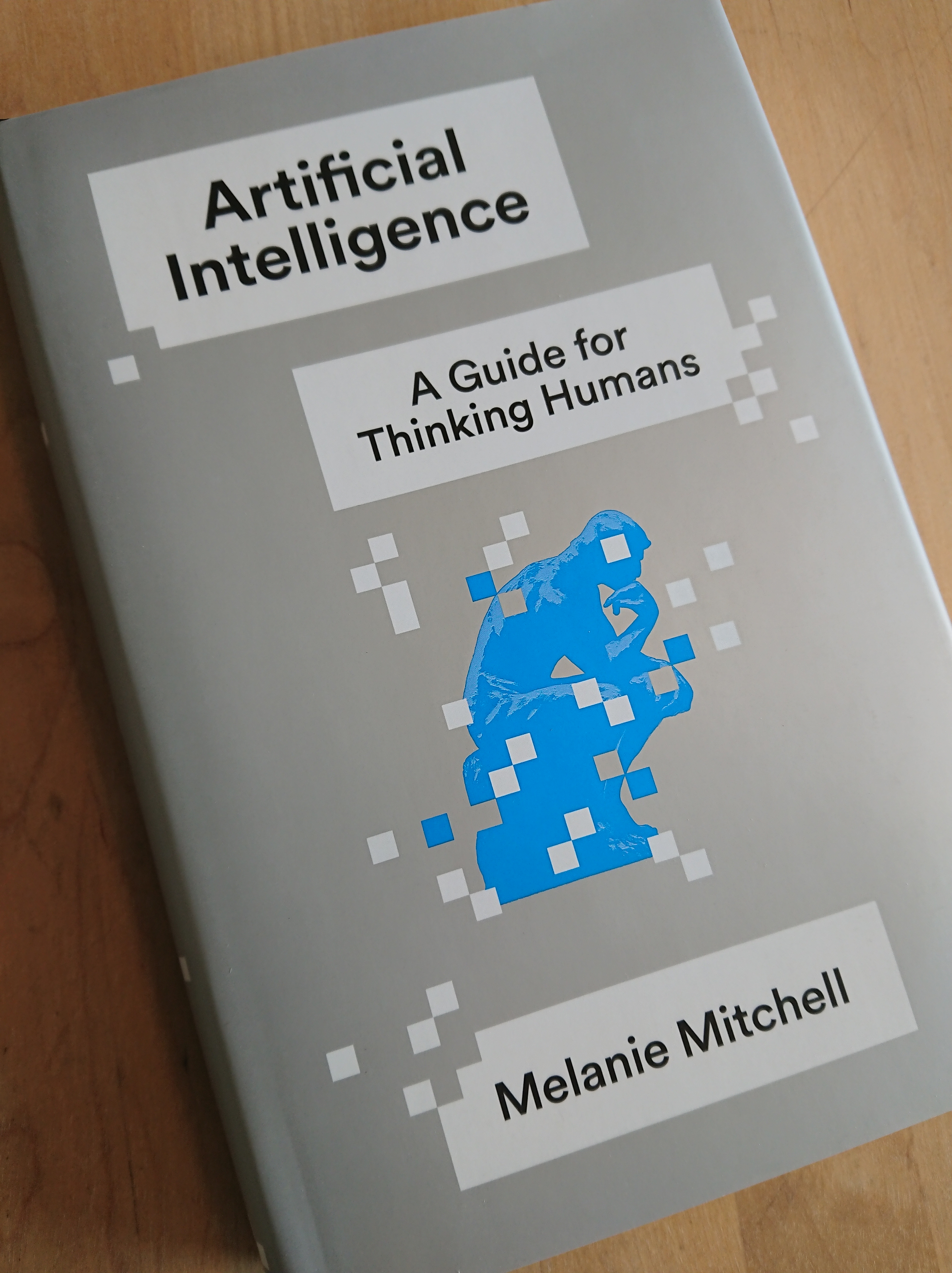
I really enjoyed reading Artificial Intelligence – A Guide for Thinking Humans by Melanie Mitchell. The author is a professor of computer science and an artificial intelligence (AI) researcher. The book is her attempt at working out if the singularity is near (or at least likely), or if we still are far from creating any true intelligence. In the process, the reader gets an excellent overview of the state of the art in areas such as image recognition, game play, and natural language processing. Even though it is aimed at general readers, I found it to be very good in technical content.
I really like Secure by Design. The key idea is that there is a big overlap between secure code and good software design. Code that is strict, clear and focused will be easier to reason about, and will have fewer bugs. This in turn makes it less vulnerable to attacks. This is easy to say, but Secure by Design is full of techniques for how to actually do this. Here are the ideas from the book that I liked the most.
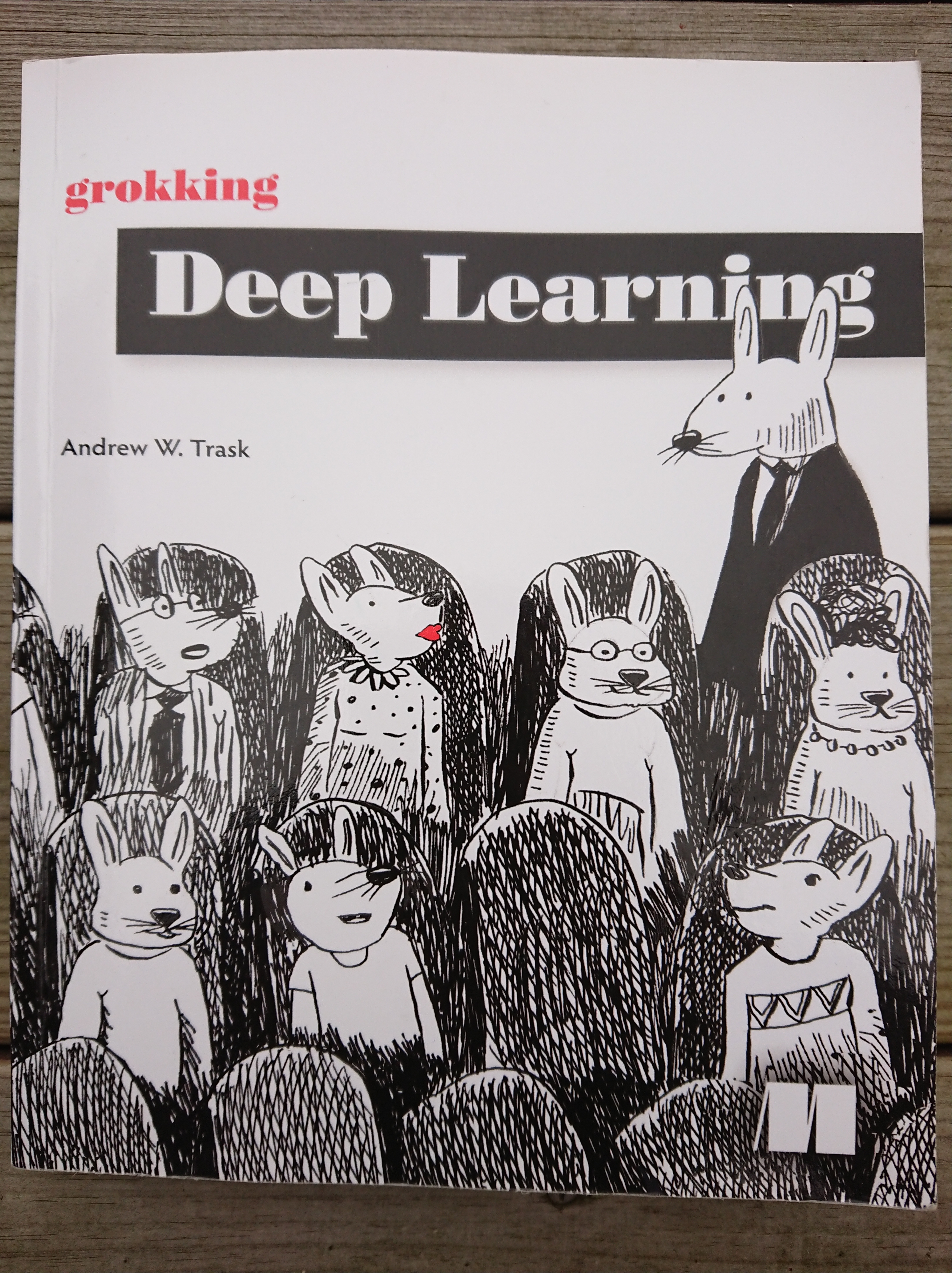
In the book club at work, I just finished reading Grokking Deep Learning by Andrew Trask. It is an introduction to deep learning, but there are some problems. It spends a lot of pages on the basics, and in the end moves on to some fairly advanced topics. It is also contains many small and irritating mistakes. However, it does have some great insights into deep learning.Continue reading →
I really enjoyed Classic Computer Science Problems in Python by David Kopec. It covers many different problems I hadn’t read detailed explanations of before. For example: neural networks, constraint-satisfaction problems, genetic algorithms and the minimax algorithm. Unlike many other books on algorithms and programming problems, this one builds up complete (but small) programs that are easy to explore on your own.





 Henrik Warne's blog